
Mentor Guides
How to Be a Good Mentor: 7 Habits That Matter
Seven practical habits that help a mentor build trust, listen well and offer a young person steady guidance over time.

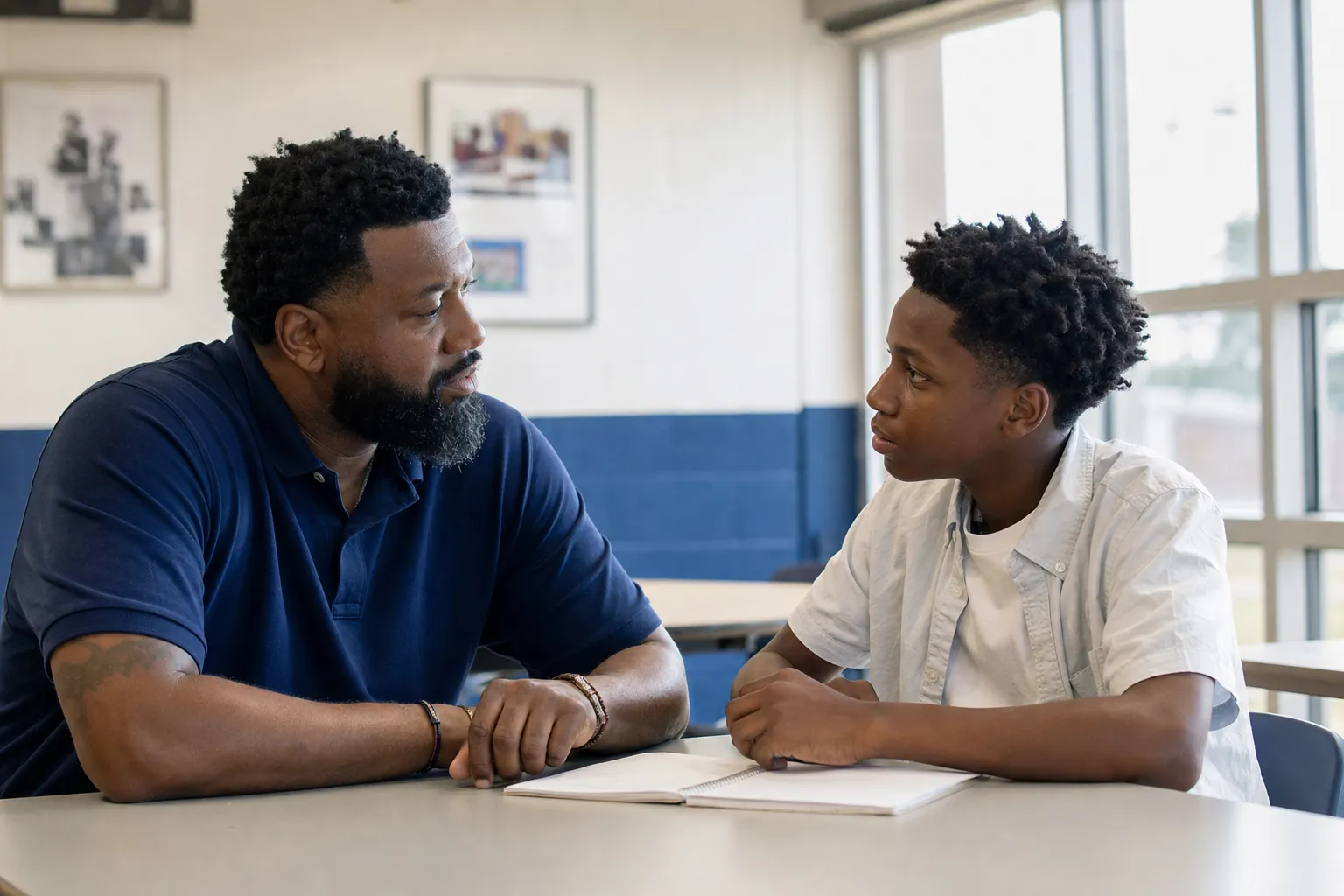
A good mentor is not the person with the best speech, the biggest personality or the most expensive plan for a Saturday afternoon. He is the adult who makes a young person feel seen, respected and safe enough to keep talking. That takes more than good intentions. It takes habits that make trust possible.
For a young person, the difference between an adult who is interested and an adult who is dependable can be enormous. A mentor does not need to have lived the same life or have the answer to every problem. He needs to bring attention, patience and a willingness to keep showing up. That is the heart of the mentoring relationship AFGM builds with boys and young men in Northern Virginia.
1. Make reliability your first promise
Before you focus on advice, activities or goals, focus on follow-through. Be where you said you would be. Confirm plans. Respond when you need to reschedule. A young person may be quietly watching to see whether this relationship will last past the first few conversations. Your consistency answers that question long before a motivational talk can.
Reliability does not mean never having a conflict. Work, family and illness are real. It means communicating early, taking responsibility for the change and helping set a new plan. Avoid disappearing, making vague promises or expecting a young person to carry the responsibility for reconnecting. A mentor sets the tone by treating the relationship as important.
It helps to create a simple rhythm that both people can understand. Maybe you check in on the same afternoon each week. Maybe you agree on how to confirm a meeting and what happens if either person needs to change the plan. The routine does not need to be complicated. In fact, a clear routine is often better than a long list of good intentions because it reduces uncertainty for everyone involved.
Consistency also has a quieter side. Remember something a young person told you. Ask how a test, game, interview or family event went. Notice when he has made an effort. These details tell him that your attention did not end when the last meeting did. They give the relationship continuity, even when you are only together for an hour.
MENTOR's guidance for becoming a better mentor centers the relationship itself, including being present, responsive and open to learning. This is a useful standard: show that your word has weight, even in ordinary moments.
2. Listen before you try to solve anything
Many adults feel useful when they can offer a solution quickly. Mentoring is different. A young person may need room to explain what happened at school, why a friendship feels complicated or what makes a goal seem out of reach. If you rush to fix the problem, you can accidentally teach him that his own point of view is not worth hearing.
Start with questions that invite more than a yes or no answer. What felt hardest about that? What do you think you want to do next? What are you hoping will change? Then pause. Let silence do some work. A thoughtful response usually comes after a young person has had time to think, not after an adult has filled every gap.
Listening does not mean agreeing with every choice. It means understanding the situation well enough to respond with respect. Once a young person feels heard, he is more likely to consider a different perspective, a new option or a practical next step.
Pay attention to the difference between a question that opens a conversation and one that feels like an interrogation. "What was that like for you?" gives someone room to explain. "Why did you do that?" can sound like a verdict before you know the facts. Your tone matters as much as the words. A calm, curious approach makes it easier for a young person to talk honestly about a mistake, not just a success.
3. Ask questions that help a young person notice his strengths
A mentor should not turn every conversation into a report card. Young people already hear plenty about what needs to improve. A better mentoring conversation also notices effort, judgment, interests and the small moments that show growth.
Try questions such as: What went better than you expected this week? When have you handled something like this before? What are you good at that other people may not notice? Who can help you with this? These questions do not flatter for the sake of it. They help a young person connect his abilities to real choices.
This approach also gives advice a better foundation. Instead of telling someone what he should do, you can ask him to name the options, weigh the tradeoffs and consider what kind of result he wants. The lesson is not simply how to solve one problem. It is how to think through the next one with more confidence.
Be specific when you notice something positive. "You kept your cool when that was frustrating" is more useful than a generic "Good job." Specific feedback helps a young person see the behavior that led to progress. It also keeps encouragement honest. You are not telling him that every outcome was perfect. You are showing him that effort, preparation and judgment are worth recognizing.
4. Keep the role clear and the boundaries healthy
A mentor can be a steady listener, a positive example and a source of perspective. He is not a parent, therapist, disciplinarian or emergency service. Clear boundaries protect the young person, the family and the mentor. They also make the relationship easier to sustain because everyone understands what the role is and is not.
Use the communication and meeting practices set by the program. Keep personal information private within the program's safety and reporting rules. Do not promise secrecy when a safety concern is involved. If a young person shares something that feels serious, bring in the right support instead of trying to carry it alone.
The Office of Juvenile Justice and Delinquency Prevention describes mentoring as a consistent, supportive relationship and highlights the importance of quality practice. That quality includes knowing where mentorship ends and when staff, caregivers or qualified professionals need to be involved.
5. Be curious about the young person's world
You do not need to copy a young person's interests to connect with him. You do need to care enough to learn. Ask about music, games, classes, sports, family traditions, work, friendships and the things that make him laugh. A question asked with real interest is often more meaningful than an activity planned from a checklist.
Curiosity also helps you avoid assumptions. A young person may have different values, pressures or experiences than you did at his age. Do not treat those differences as a reason to lecture. Treat them as information that helps you understand what support might actually be useful.
When you are unsure, say so. You can ask, "Help me understand that," or "What is that like for you?" That kind of humility makes it easier for a young person to be honest. It also models a skill he can use in his own relationships.
6. Build a relationship with the family and program, not around them
A strong mentor adds another supportive adult to a young person's life. He does not compete with parents, caregivers, teachers or counselors. Respect for those relationships is part of being trustworthy. It keeps the focus on what the young person needs instead of making the mentor the center of the story.
Stay connected to the program's staff and follow its process when questions arise. Be respectful when a caregiver shares a concern or gives context that changes how you see a situation. Families looking for this kind of support can also review how AFGM works with families before taking the next step.
MENTOR's Elements of Effective Practice for Mentoring Programs identifies screening, preparation, relationship development and ongoing support as distinct parts of a quality program. That matters because a mentor should have people to turn to when the relationship needs guidance, not be expected to improvise alone.
7. Repair the relationship when you get something wrong
No mentor gets every conversation right. You may misunderstand a story, push too hard, miss an appointment or give advice that does not land. The important question is what happens next. A simple apology can be powerful: "I did not listen well there," or "I should have told you sooner that I needed to reschedule."
Repair teaches something valuable. It shows that respect is not limited to easy moments and that trust can be rebuilt through honesty. Do not make the apology about your own guilt or ask the young person to reassure you. Name what happened, take responsibility and make a better choice next time.
Over time, that pattern can give a young person a healthier model for handling conflict in his own life. He sees that a relationship can survive a mistake when both people treat each other with care.
There is a useful limit here: repairing a mistake does not mean asking a young person to manage your emotions or becoming overly familiar to win back his approval. Keep the focus on the relationship and the next responsible action. If a problem is bigger than a conversation between the two of you, involve the program. Knowing when to ask for help is part of maturity, not a sign that you have failed as a mentor.
How AFGM helps mentors put these habits into practice
Good mentors do not have to figure everything out alone. AFGM gives qualified men in Northern Virginia and the wider DMV a clear way to serve through one-to-one guidance, a nine-month commitment and initial plus quarterly training. Mentors meet or contact their assigned mentees for at least one hour each week, with monthly meetups that help build a dependable rhythm.
That structure gives a relationship enough room to move beyond introductions. It also helps mentors stay grounded in character, accountability and practical support. If you are still deciding whether the role fits your life, start with AFGM's practical guide to becoming a mentor. If you are ready to begin, complete the mentor application and start the conversation.
Families benefit from that care as well. A mentor relationship works best when it adds to the circle around a young person and stays connected to the people who care about him. AFGM's boys mentoring program explains what that steady, character-driven support can look like for a family considering a mentor relationship.
Questions
Frequently asked questions
What is the most important quality of a good mentor?
Reliability is the foundation. A young person needs to know that a mentor will keep a promise, communicate when plans change and return to the relationship week after week. Listening, encouragement and good advice matter more when they are backed by that consistency.
How often should a mentor meet with a young person?
The right schedule depends on the program and the young person's needs. What matters is choosing a rhythm that is realistic and then protecting it. At AFGM, mentors meet or contact their assigned mentees for at least one hour each week during a nine-month program.
Should a mentor give advice or just listen?
Both have a place, but listening comes first. A mentor can offer perspective and share experience after he understands what the young person is thinking, feeling and trying to decide. The goal is to help him build judgment, not to make every decision for him.
What should a mentor do when a situation feels serious?
Do not try to manage a safety, health or legal concern alone. Follow the program's procedures and contact the staff member responsible for supporting the match. A responsible mentor knows when steady support needs to be paired with professional or program guidance.
Keep Reading
Related posts
Mentor Guides
How Do I Become a Mentor? A Practical Guide
A clear guide to choosing a mentoring program, preparing for the process, and building a dependable relationship with a young person.
Read the guide →